
Macro photograph of a human eye — central macular territory. Fig. 1 · Eye — macular focus

RETINA

Procedure · Vitreoretinal surgery

Macular hole surgery

Keyhole surgery to close a small gap in the very centre of the retina — with the aim of restoring the straight-ahead, reading vision that a macular hole takes away.

A macular hole is a small full-thickness gap at the fovea, the exact centre of the retina. Surgery is a vitrectomy — removing the vitreous jelly — combined with peeling away an ultra-thin surface layer, the internal limiting membrane (ILM), and filling the eye with a gas bubble that presses the edges of the hole together so it can close.

A period of face-down posturing is sometimes advised. Most holes close after one operation.

Who it is for

Macular hole surgery is for people with a macular hole causing distorted or blurred central vision. Smaller, newer holes tend to close more reliably, which is why timely surgery matters.
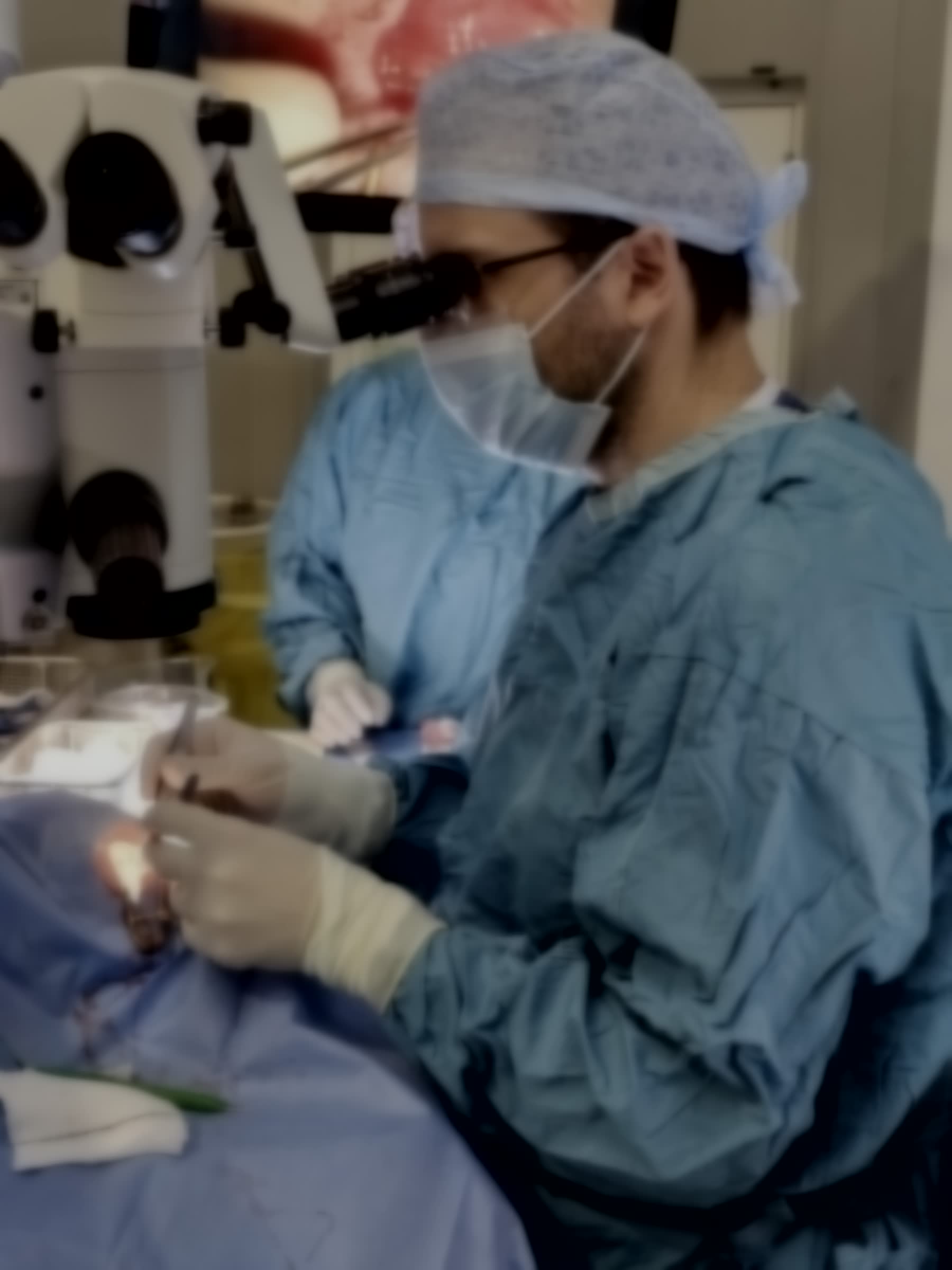
A surgeon operating under an ophthalmic microscope in a sterile theatre.
Fig. 2 · Macular hole theatre — sterile field
What to expect

Before, during, and after.

1
Before

Scans and a plan

A scan (OCT) confirms the hole and is used to plan the operation. The options are explained in plain terms, consent is taken with time to ask questions, and a posturing plan is agreed.

2
During

Vitrectomy, peel and gas

Under local or general anaesthetic, the vitreous jelly is removed, the internal limiting membrane is gently peeled, and the eye is filled with a gas bubble to press the edges of the hole together.

3
After

Healing over weeks to months

Posture as advised, use the drops you are given, and do not fly while the gas bubble remains in the eye. Vision is very blurred at first and improves slowly over weeks to months as the hole closes and settles.

Risks, stated plainly

Macular hole surgery is a well-established operation, but no eye surgery is without risk. The ones worth understanding are:

  • Cataract. The eye’s natural lens very commonly clouds after this surgery; this is often treated later with cataract surgery, or combined with the operation.
  • The hole may not close, or may reopen, and a repeat operation is sometimes needed.
  • Raised eye pressure, which usually settles with drops.
  • Infection or bleeding inside the eye — uncommon, and treated promptly if it occurs.
  • A retinal tear or detachment, which may need further treatment.
  • Some distortion of central vision may remain even after the hole has successfully closed.

Your individual risks depend on your eye and the reason for surgery, and are discussed honestly before you decide.

Consultation

Talk it through with Dr. Diafas.

Whether macular hole surgery is right for you is a decision made together, after your scans and symptoms are reviewed.

This page provides general information only and is not a substitute for an individual consultation. If you are worried about your vision, seek medical advice.