
Optical lens measurement device in an eye clinic. Fig. 1 · Optics — lens planning

CATARACT

Procedure · Cataract

Cataract surgery

Replacing the eye’s clouded natural lens with a clear artificial one — a short, day-case operation, and among the most common performed in medicine.

A cataract is a clouding of the eye’s natural lens. In surgery the cloudy lens is softened and broken up by fine ultrasound (phacoemulsification) and removed through an incision only a couple of millimetres wide; a clear, permanent artificial lens — an intraocular lens, or IOL — is placed where it sat.

It is usually done awake, under drops or a local anaesthetic, as a day case.

Who it is for

People whose cataract has begun to affect everyday life — reading, driving, glare at night, faded colours. There is no need to wait until it is “ripe”; timing is guided by how much it bothers you. Lens options — standard monofocal, toric for astigmatism, or extended-depth-of-focus — are discussed at consultation and matched to how you use your eyes. [Fees and lens options are confirmed at consultation — no fee display until set by the owner.]
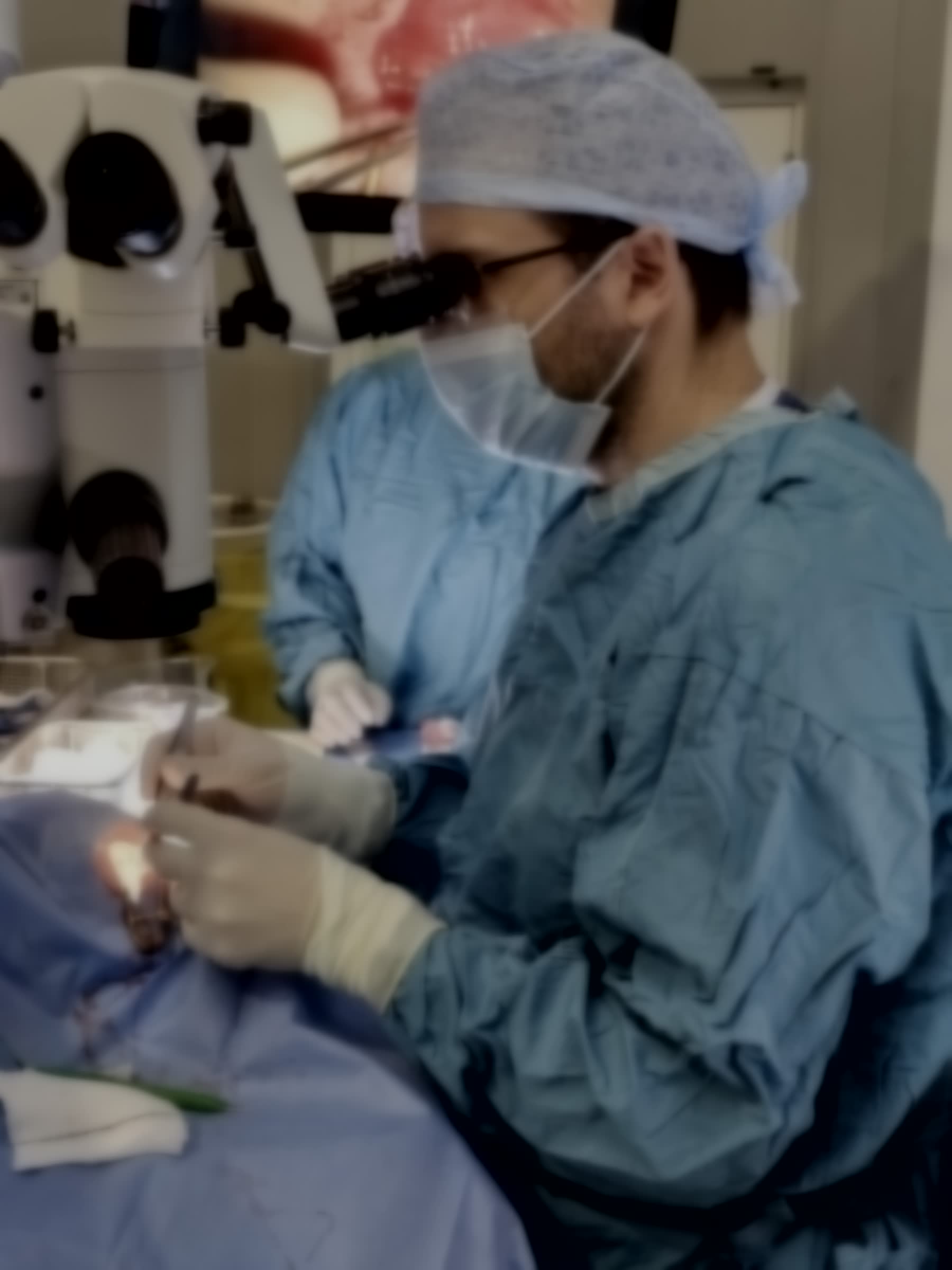
A surgeon operating under an ophthalmic microscope in a sterile theatre.
Fig. 1 · Theatre — sterile field
What to expect

Before, during, and after.

1
Before

Measurements and a plan

Precise measurements — biometry — choose the power of the new lens, and drops are prescribed ahead of the day. The lens options are talked through and matched to how you use your eyes.

2
During

A short operation, awake

The eye is numbed so you should feel no pain — a sensation of lights and movement rather than discomfort — as the clouded lens is removed and the new one is set in its place.

3
After

Clearing over days

Vision often clears within a few days. Drops are used for a few weeks, and heavy lifting or rubbing the eye is avoided while it settles.

Risks, stated plainly

Cataract surgery is a well-established operation, but no eye surgery is without risk. The ones worth understanding are:

  • Clouding behind the lens. A common, harmless late clouding of the membrane behind the lens (posterior capsule opacification), easily cleared with a quick, painless YAG laser in clinic.
  • You may still need glasses for some tasks.
  • Infection inside the eye — rare.
  • Swelling of the retina or cornea.
  • Rarely, a tear of the lens capsule during surgery.
  • Uncommonly, retinal detachment — a little more likely in very short-sighted eyes.

Your individual risks depend on your eye and are discussed honestly before you decide.

Consultation

Talk it through with Dr. Diafas.

Whether cataract surgery is right for you is a decision made together, after your scans and symptoms are reviewed.

This page provides general information only and is not a substitute for an individual consultation. If you are worried about your vision, seek medical advice.